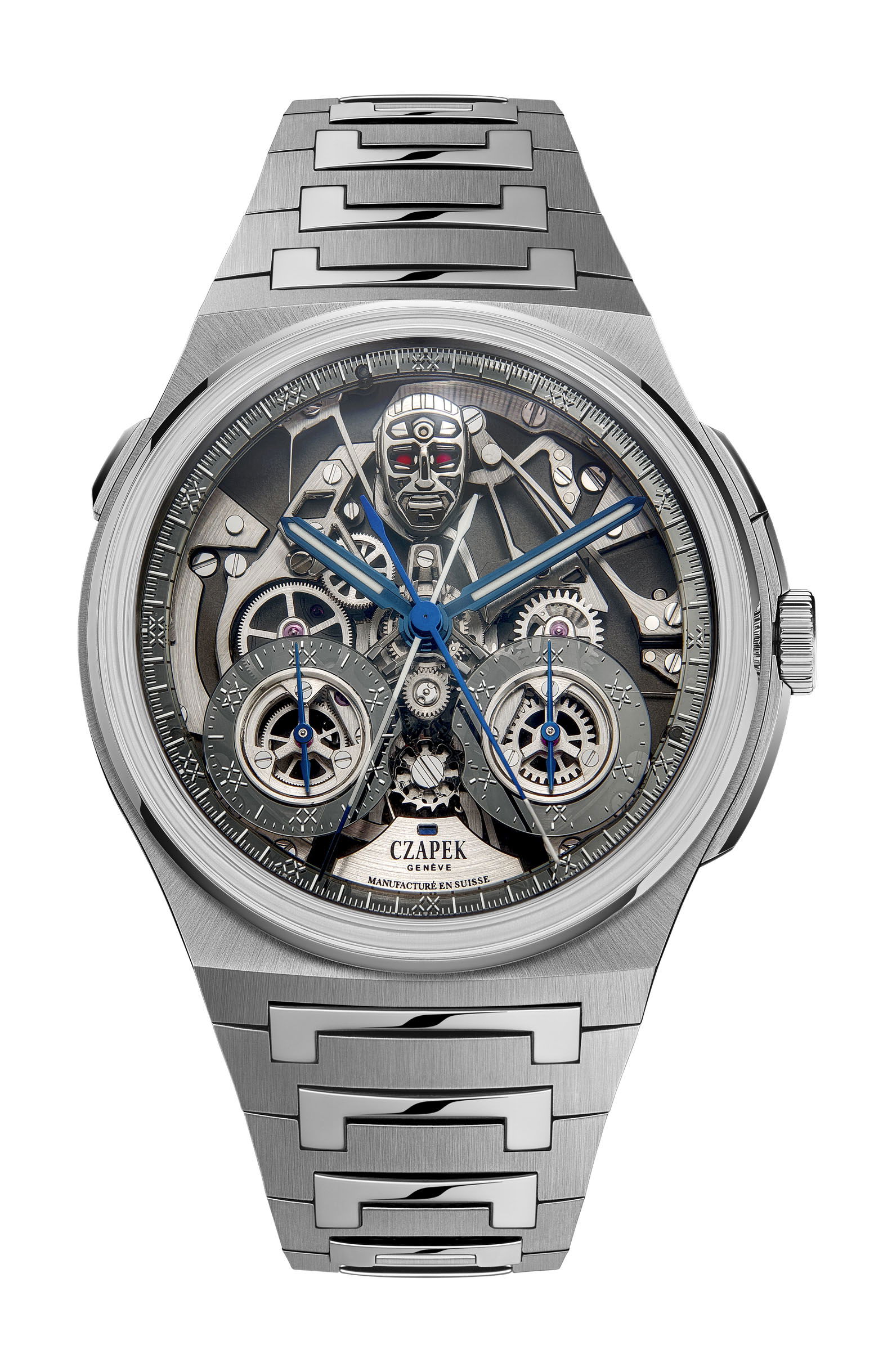

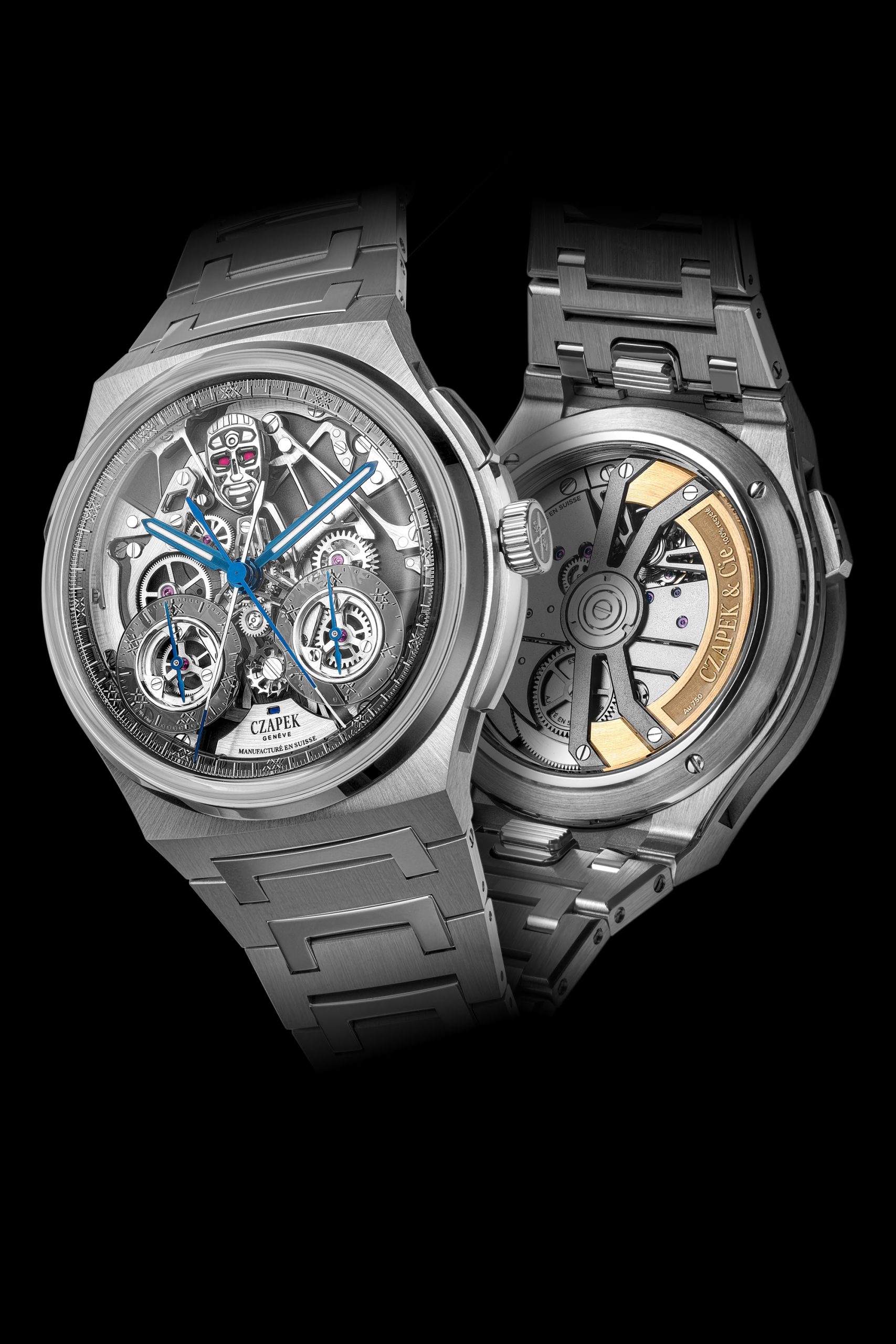
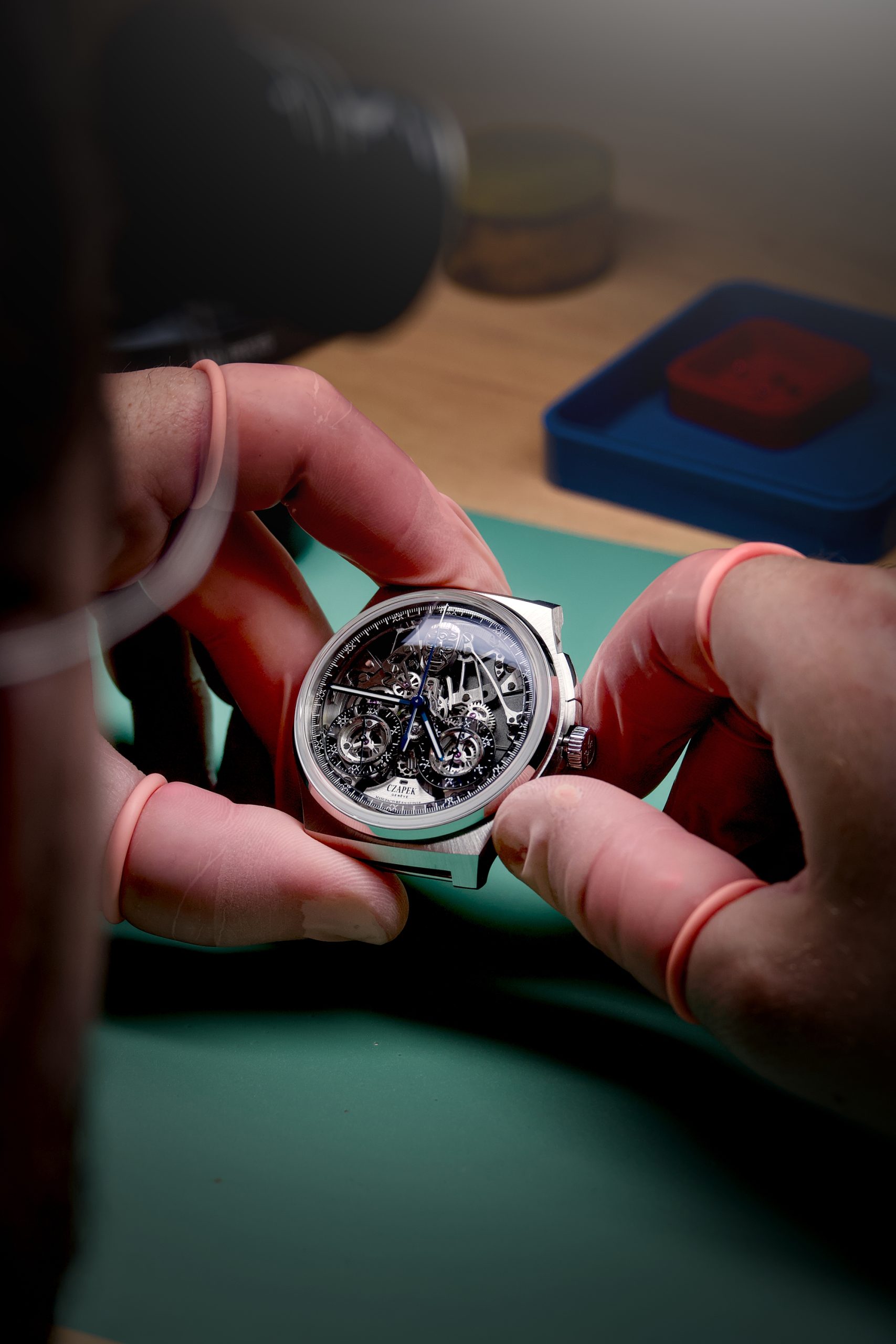
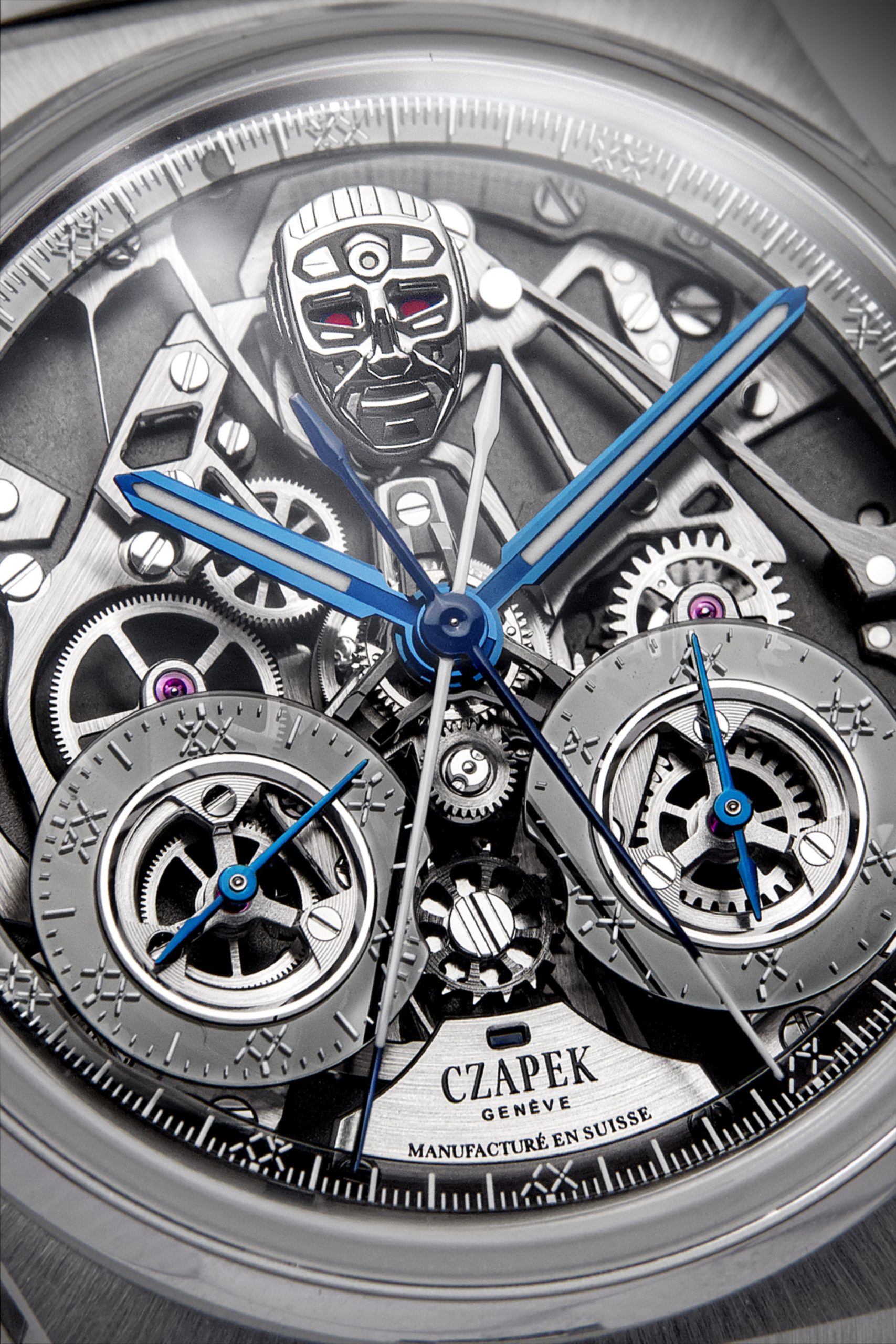
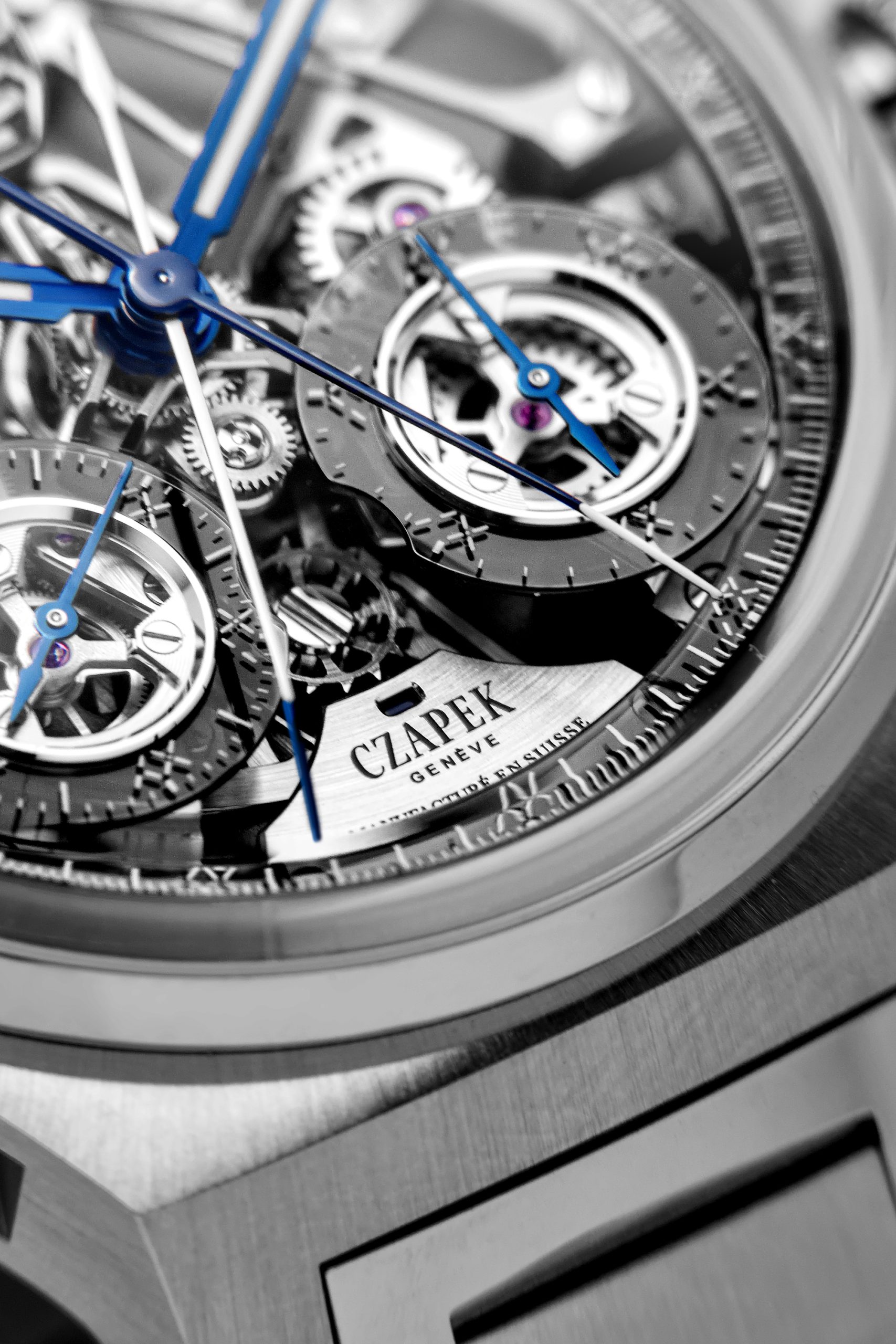
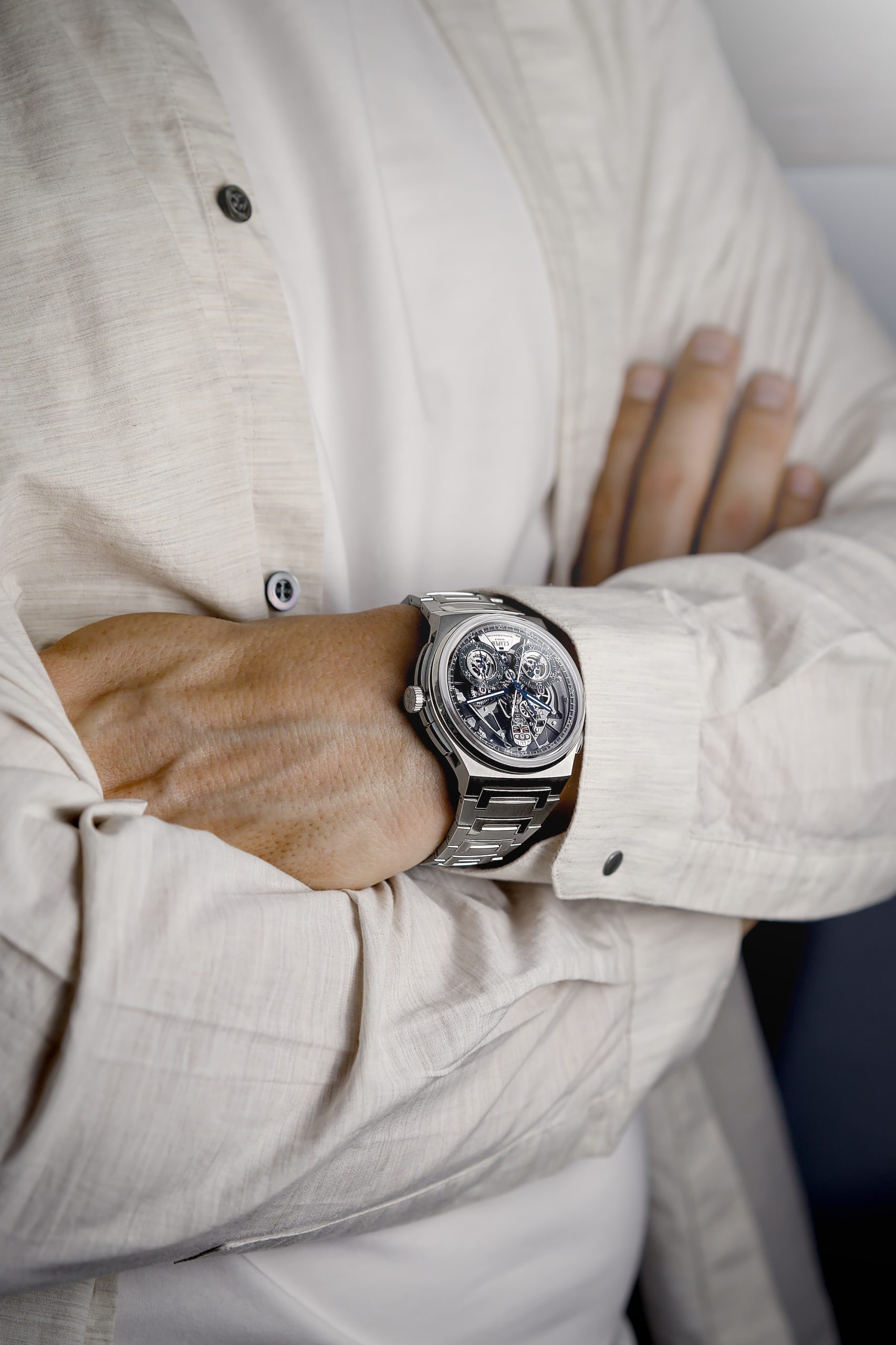
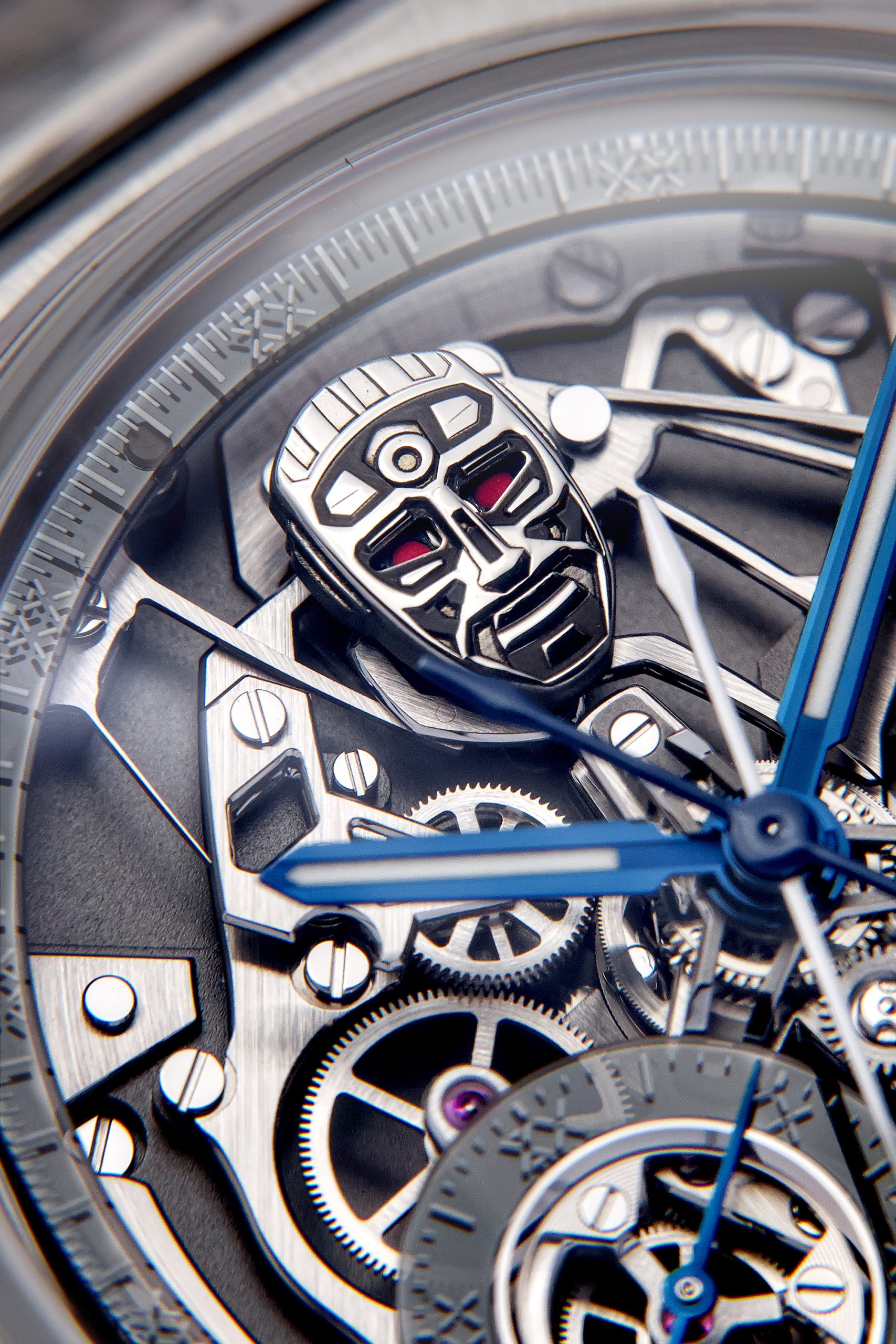
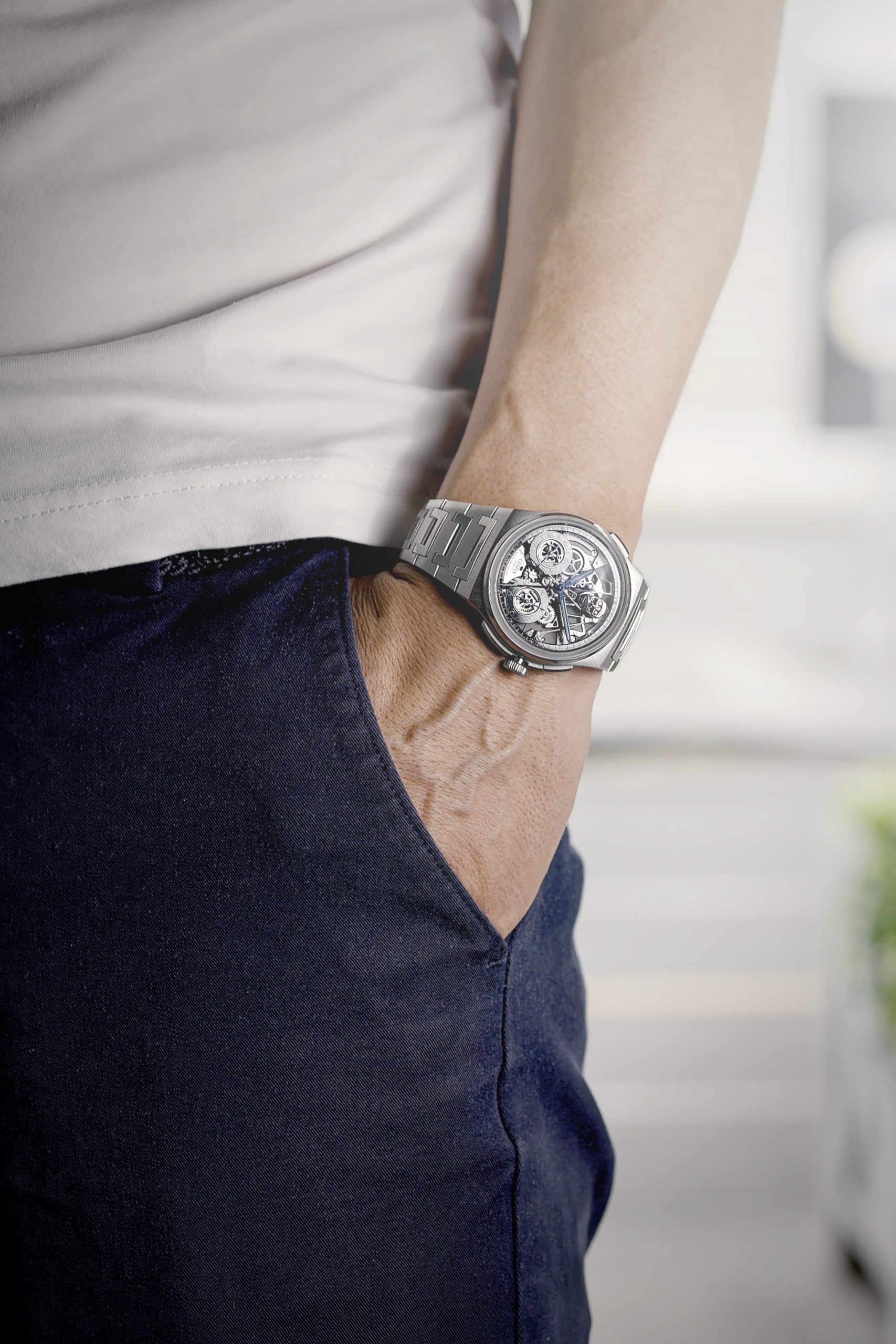
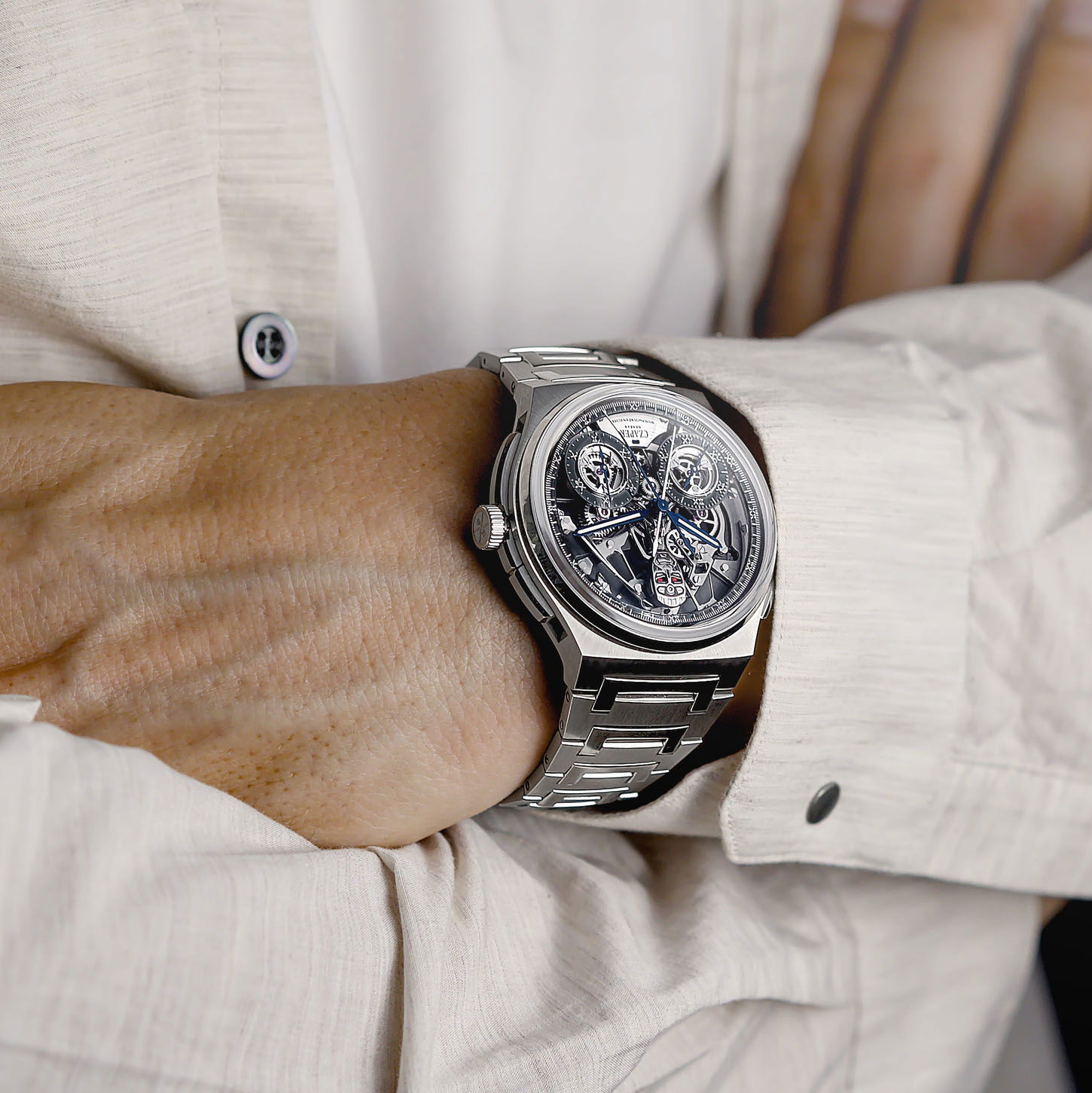

Will robots one day govern our lives, or can we still keep some control? Czapek’s latest creation, the Antarctique Rattrapante “R.U.R.,” plays with that very question. Beneath its grey-metallised sapphire dial, a tiny robot animates the watch’s mechanics with surprising flair. Each press of the chronograph pushers brings the robot to life: start, and its eyes flash yellow; stop, and they burn red; reset, and they turn blue. More than a gimmick, this playful detail directs attention to the beauty of the rattrapante movement on full display. The robot itself, crafted in titanium by Czapek’s partner MD’Art, is a miniature sculpture, polished, engraved, and hand-painted with neon pigments.
The watch also draws on deeper history. The very word “robot” was introduced a century ago in Karel Čapek’s 1921 play R.U.R. (Rossum’s Universal Robots), a work that warned of technology’s dehumanising side. In his early drafts, Čapek had called his mechanical workers labori, but on his brother Josef’s suggestion, he settled on roboti, a word that originally referred to forced labour in Central Europe. The play quickly spread across the world and influenced generations of science-fiction, from Blade Runner to Terminator. By referencing Čapek, Czapek Cie not only honours this cultural milestone but also revives the same timeless questions: how do we balance human creativity and technological power?
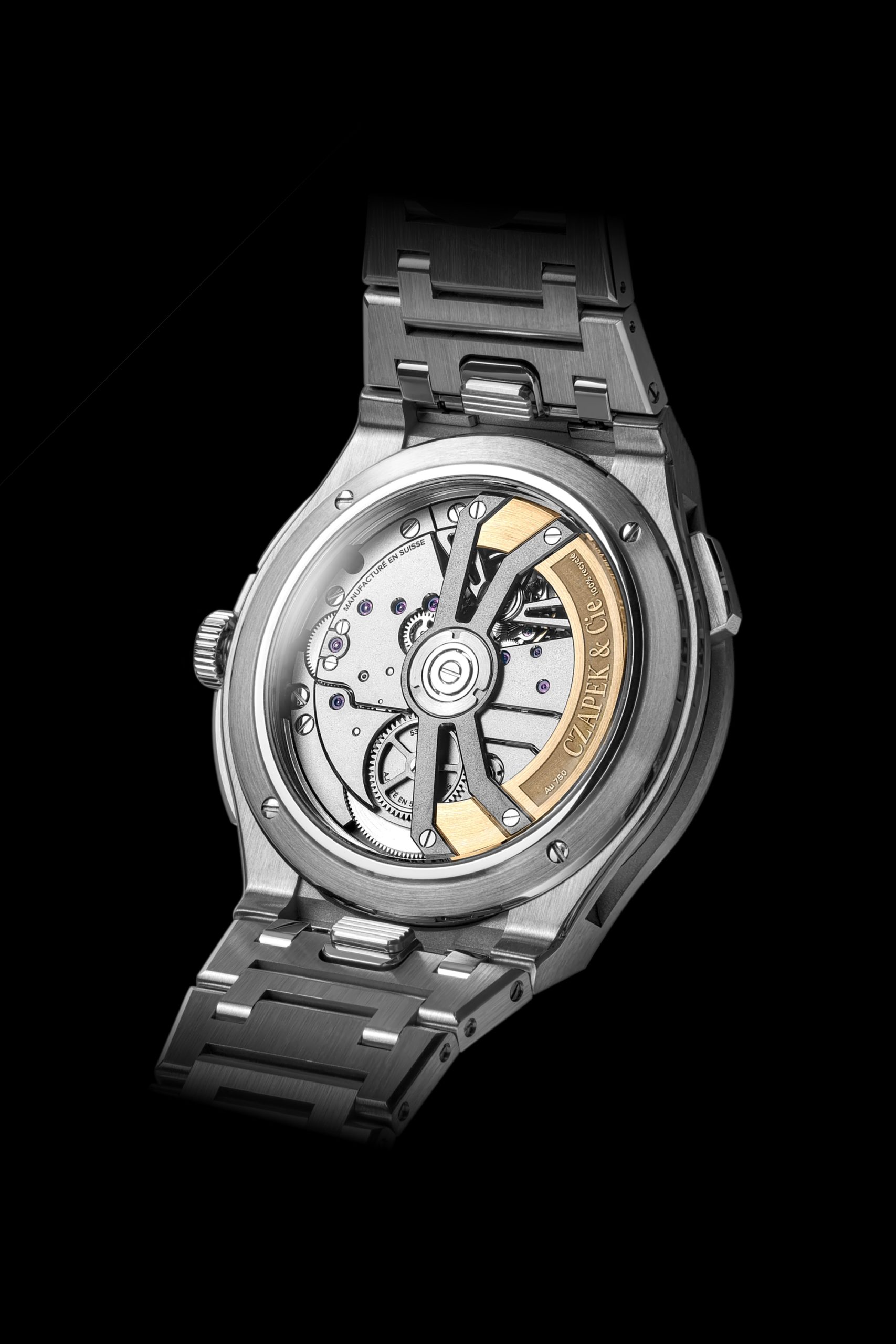
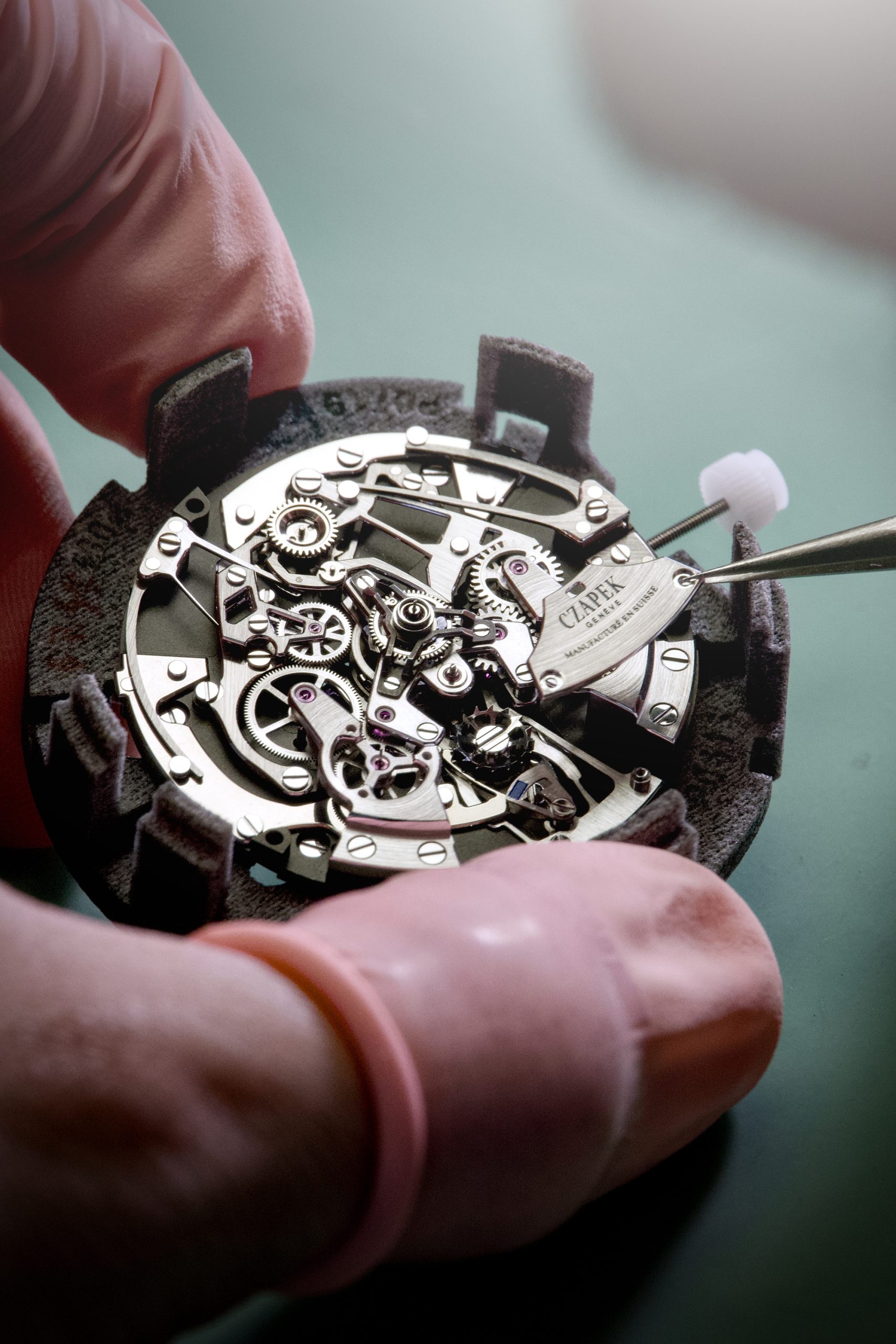
Mechanically, the Antarctique Rattrapante R.U.R. represents a step forward for Czapek. Its Calibre SXH6 inverts the traditional architecture, placing the split-seconds mechanism on the dial side for all to see. Every detail – the tripod bridge, the twin column wheels, the isolator that reduces friction – reveals the intricacy of one of watchmaking’s most prestigious complications. Finishing touches, from mirror-polished screws to the rose-gold rotor visible through the caseback, complete the picture. Limited to just 77 pieces, this watch is both a philosophical statement and a feat of Haute Horlogerie.


